Strippers on Strike for the Abolition of Bar Fee
By Adore Goldman et Kit Keli
On May 5th, the Sex Work Autonomous Committee (SWAC) organized a militant assembly of sex workers (SWers) on workplace organizing. This well-attended meeting generated a lot of enthusiasm among participants. However, one clear takeaway emerged: it is necessary to clarify our strategy if we want to move forward and bring more colleagues into our unionization project.
That’s why we will attempt here to lay the groundwork for a campaign that could serve to organize the various strip clubs in Montreal around a common strategy: demanding the abolition of the bar fee1 system. We chose to focus on strip clubs because that’s where both of us work. However, we believe that similar demands could be adopted by massage workers to unionize as well.
The bar fee has historically been a tool used to suppress stripper organizing, and therefore it must be abolished. To achieve this, we will present our strategy for attaining this goal, which culminates in a strike, a tactic that has been central to all strip club unionization efforts to date.
The Little History of the Bar Fee
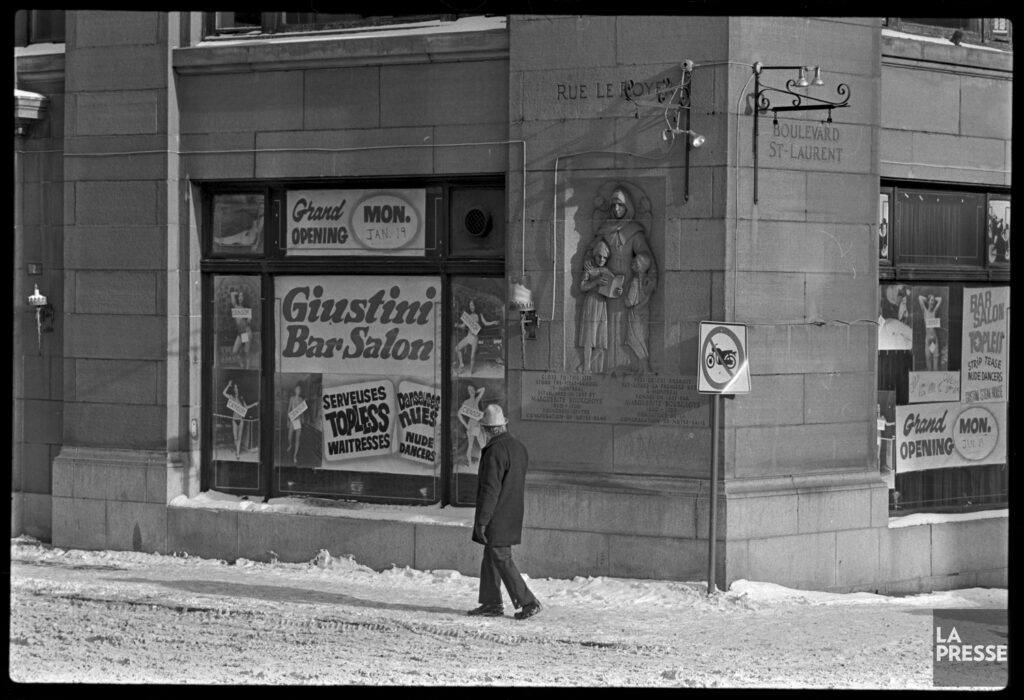
The bar fee is seen by many dancers as a symbol of freedom. You pay to work, and in exchange, you’re the master of your own schedule. But this is becoming less and less true — if it ever was. Many bars now require new dancers to work a weekday before they’re allowed to work weekends. You don’t get to choose your hours and you’re often required to stay until closing time, at 3 a.m. One club in Montreal even demands that dancers book themselves several months in advance. Calling in sick is also difficult in many bars.2 We’re far from the idea of self-employment where you can work whenever you want.
The reality is that we’re clearly trapped in an employer/employee power dynamic, and the bar fee model benefits only the bosses. Indeed, they have every incentive to bring in as many dancers as possible each night to maximize their profits. As for our safety, our employers show very little concern and leave us to handle it on our own.
Some clubs have really high bar fees, meaning that when you start working, you’re already in the negative sometimes of a hundred dollars, with the sometimes required additions of late fees, tipping out, and stage penalties. Over one month, it’s thousands of dollars that goes in your employer’s pocket and not in yours.
Strip clubs haven’t always worked this way in Canada and the United States. Tracing how they’ve changed helps us understand that the bar fee was a response to workers’ struggles, informing our future strategies of abolition.
We spoke with Nicole Nepton, who worked in strip clubs in Quebec and Ontario in the 80s and 90s and was active in advocating for SWers’ rights. Back then, dancers were still salaried: they earned an hourly wage and did table dances for $5, keeping the full amount. Contrary to what one might think, schedules were also flexible, sometimes even more so than they are now. “If it didn’t work for you, you just left!” she recalls.
At the turn of the 2000s, dancers’ organizing forced management to adapt. In 1997, San Francisco’s Lusty Lady became the first strip club in North America to unionize. After this historic win, the dancers launched a unionization campaign across the U.S. and bought the establishment to turn it into a worker-owned cooperative.
It’s no coincidence that the bar fee model emerged around that time, allowing management to sell spots at their clubs under the guise of increased freedom. According to our research, it began creeping in during the early 2000s. A colleague who has been dancing for 20 years explained that at first, it was just a flat fee paid to the bar that replaced tipping on drinks. Eventually, the owners took it over and added mandatory tipping for the doorman and DJ as well. By 2004, a dancer named Cindy was already describing these changes in a written piece, mourning the “good old days”3 of hourly wages. She wrote:
There are too many of us working at the same time in the same club, we have no base salary, we are forced to pay to work, and we have no access to social protections like labor standards, workplace health and safety commissions (CSST), unemployment insurance, etc. Our profession is badly misunderstood and our conditions could definitely be improved. Tell me, when is the unionization of nude dancers going to happen?4
Twenty years later, we think just like her it’s high time we take unionization into our own hands and abolishing the bar fee should be one of our core demands.
Going on the Offensive
We propose that abolishing the bar fee be the cornerstone of a unionization campaign in Montreal strip clubs. This way, we can form autonomous unions within our own clubs, but also have a shared demand that unites us in our struggle against management across different workplaces.
It’s also an offensive strategy. Rather than constantly reacting to management’s abuses, we can act according to our own agenda. We’ll have the strategic advantage of being prepared ahead of time and controlling the timeline.
This is also a first step toward bringing back the hourly wage that our predecessors lost. The goal is to break free from the illusion of self-employment and hold employers accountable not just for wages, but for everything that comes with them: workplace safety, hygiene standards, basic rights like sick leave, etc. A union would also allow us to clarify and secure the schedule flexibility we want. With a strong union and a collective agreement, we can negotiate the terms we want and prevent rules from changing arbitrarily based on the boss’s mood.
If this seems hard to imagine, it’s because worker struggles have been weak in recent decades, and major unions have chosen a strategy of compromise, always dampening workers’ demands for better conditions. But that doesn’t mean we can’t create autonomous unions that do things differently, adopting a posture of radical rupture rather than serving as mediation between the grassroots militants and the employer. Or to say things differently, a union that is grassroots in and of itself.
Don’t Act Alone
In our view, the first step for SWers who want to unionize in their workplace is to start acting collectively. That doesn’t mean there has to be full consensus; waiting for that would block any progress. Talking politics at work will inevitably create tension. But action requires a critical mass, even if it’s still a minority, that can scare management.
The first step is to find allies. At first, just two or three people may be enough. The goal is to form a small committee to launch the campaign. To feel less alone, we propose that SWAC serve as a space to talk strategy and share mobilization tools (flyers, posters, etc.). From there, you’ll be ready to speak to your coworkers about our demands.
Not acting alone is essential, because as soon as you start talking about unionizing in a workplace, you expose yourself to backlash. By organizing together from the start and connecting with workers in other workplaces, we ensure that solidarity actions can be taken in the event of retaliation. This is our best protection against employer pushback. Both strip clubs that unionized in the U.S., the Lusty Lady and the Star Garden, have seen the more militant workers fired for their actions. While stressful for the targeted workers, it was that very injustice that created solidarity and led to the first collective agreements, furthering the goals of the movement.
Preparing for Job Actions
We recognize that everybody’s union is going to have varying capacities for different levels of action so, in preparation, workers must collectively decide what job actions are best for them. Preparation for actions will always be unique in each case while rarely following a linear timeline such as that suggested below, but they tend to follow a formula such as this:-
- Invite workers to a union meeting to discuss grievances and propose possible actions to solve these issues.
- Allow some time to rally more support from allies and workers who are on the fence, create mobilization material, and organize support systems for militant workers.
- Call another meeting to vote on:
- which action to take, and
- yes or no to the action; consider deciding the date for this meeting during the first meeting while everybody is together.
- Vote!
- Prepare a plan for the job action as you voted for it; consider possible reactions from management in this plan, and how to combat them, while finalizing your demands.
Collective Negociation
Negotiation with management has its own risks that should be considered. Namely, militant workers must ensure that they never speak to management individually or in small groups. This only leaves these workers vulnerable to targeted firings or abuse from management as an attempt to stomp out union activity.
However there are other options, which may not harness the same leverage as a strike but can still be considered by your union.
- Petition/Signed Letter- Militant workers can write a petition or letter calling for the abolition of bar fee and have workers sign it in support, dancer names would be sufficient. The letter or petition should ask that a response be posted in the locker room or other common area within X amount of days, and threaten to strike if the demands are not met within this delay. An ally –preferably not recognizable by management– to the effort can then deliver a copy of this letter and signatures for the union to the club’s mailbox or other. This strategy is more effective with significant worker support for the union as the boss will subsequently have a list of all the militant workers’ names, leaving them vulnerable to abuse and maltreatment.
- Surprise Meeting- Confronting your boss without warning can be an effective strategy, but it must be carried out with a large number of the present work force on shift to ensure success. Be prepared to argue your case as a collective. Threatening to walk-out on the shift can be essential leverage in this confrontation. The unionized dancers at the Lusty Lady in San Francisco triumphantly used this strategy to demand the rehiring of a wrongfully fired dancer. This strategy also identifies militant workers, leaving them subject to maltreatment from management.
Given the risk of revealing the militant workforce, unionized workers should carefully and collectively consider attempting any sort of negotiation with management especially in the context of more socially marginalized folks who may be subject to greater risks of managerial abuse.
However, in the case of an escalated response from management to a more “reasonable” or “acceptable” type of union action, such as a signed petition, workers who are on the fence about union activity may be swayed to support the union. This is to say that collective negotiation may be more useful as a point of mobilization for workers. Some workers may be hesitant to dive head-first into an action such as a strike, but after being reminded of the abusive nature of management once again, may come to the union efforts with a fresh wind of energy and support.
Negotiation could work, but it will likely not be effective without first building leverage through more offensive actions. It is always a possibility; however, given the history of most union negotiations, we recognize that this is simply not a realistic outcome, especially in the context of an abusive industry such as the sex industry. Instead, collective negotiation should be considered following an action, such as a strike, that incentivizes the boss to negotiate and provides you with needed leverage in negotiations.
Striking as an Effective Strategy
A strike is when unionized, whether autonomously or formally organized, workers refuse to work as a means to harness leverage for job negotiations with their employer. Very simply, a collective of workers deciding not to show up to work until their demands are met is considered a strike. Although striking is often considered controversial among formal unions, it is ultimately a very effective strategy when workers are well-prepared and autonomous. It was an essential step in the unionization of both The Lusty Lady and Star Garden.
In the case of sex work and autonomous unions, most large unions do not represent or recognize us as workers; this provides the bittersweet advantage of avoiding bureaucratic loopholes in Canada’s and Quebec’s labour law which allow bosses to force their workforce back to the job. This ambiguous position provides strippers the unique opportunity to strike with essentially no recourse from labour laws.
Taking the product or service away from the employer is the crucial leverage guaranteed by a strike while in negotiations with management. As the dancers from The Lusty Lady in San Francisco put it “[Your boss is] totally powerless if the ‘product’ he’s trying to sell is outside the club carrying signs instead of inside bumping and grinding”.6 If clients really came to the strip club just for a drink, they would be at a regular bar.
While mobilizing – otherwise known as organizing, or more simply, the steps before the strike – beware of being overly vocal about action plans too early. At a certain point, you will have to share your plans with less-militant workers in efforts of further solidarity, but this runs the risk of exposing your strike plans. Therefore, it is good practice to avoid threatening something such as a strike too far in advance. The element of surprise ensures that your boss will not have the time to hire scabs to replace you. Coordinating strike plans with the unions of other clubs in the city is another strategic method of fighting against scabs while fostering city-wide solidarity. Find your allies and don’t talk to the DJs, waitresses or other employees who are not dancers about your plan. Be careful of people who have a tendency to snitch.
However your strike may play out, there is an undeniable edge in striking as an informal or autonomous union, an edge that should be taken advantage of!
Other Methods of Direct Actions in the Workplace
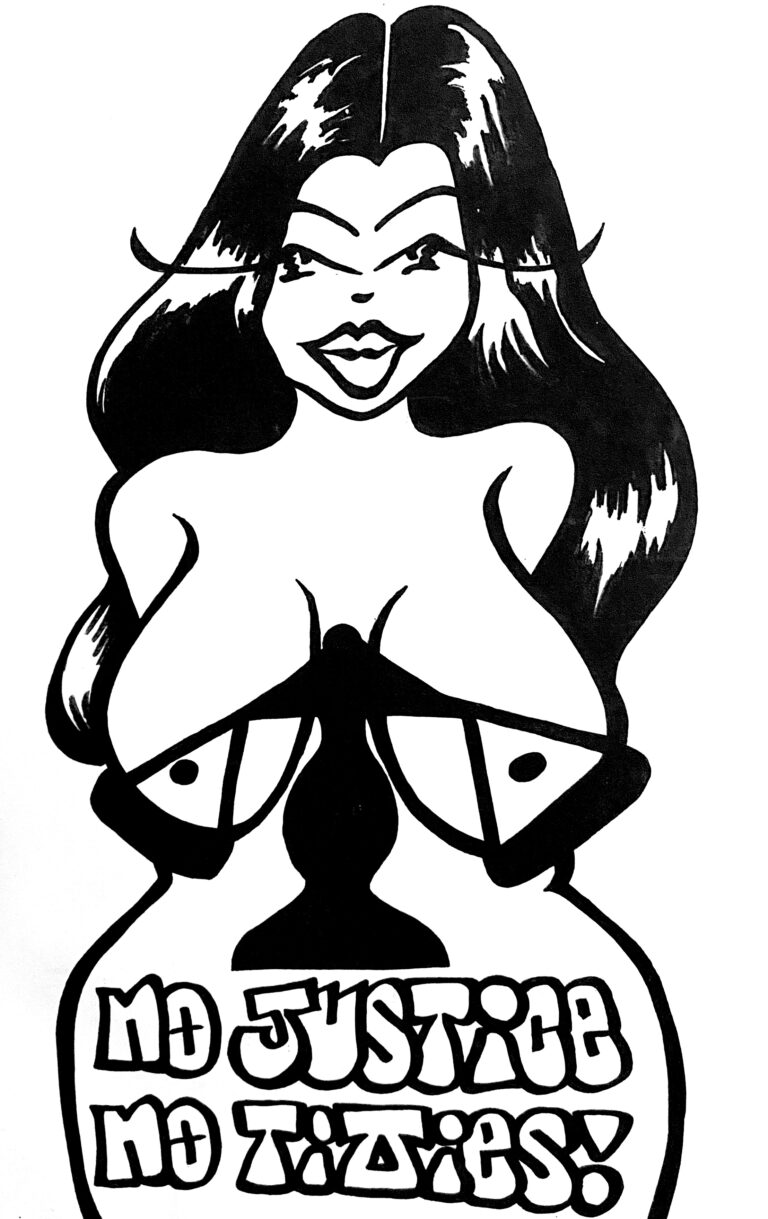
There are many variations of the traditional strike, some of which may look appealing to your union, or may be useful in conjunction with your strike. These actions require a dedicated show of support from the dancers and your allies for efficacy. Your union may consider picketing, a slow-down, sick-in, and/or whistle blowing in conjunction with your strike. For more details regarding these specific actions please see The Exotic Dancers’ Union’s No Justice, No Piece! A Working Girl’s Guide to Labour Organizing in the Sex Industry7 and/or the Industrial Workers of the World’s (I.W.W.) website8 .Conclusion
The abolition of bar fees would be instrumental in the effort for strippers’ worker rights in Canada, while bringing Canadian dancers closer to our predecessors who received hourly wages on top of dance fees and tips. The abolition of an ever-increasing bar fee has the potential to enact significant material change for strippers, which is essential in combating the economic precarity that can come with the sex industry. We are calling for the clubs of so-called Montréal, Québec, Canada and the US to establish autonomous unions collectively and call for the abolition of the bar fee.
With autonomous unions that work outside of Canada’s and Quebec’s union and labour laws, we firmly believe that the most effective means of achieving this demand would be by striking. Strippers have a unique opportunity to effectively shut down their clubs and attain the negotiating leverage typically guaranteed by a strike, without recourse from the constraints of labour laws.
This piece serves as a call to action for strippers in the coming months to organize around the common demand of the abolition of bar fee. In solidarity and power, working girls, unite!
1. Bar fee is a flat rate that dancers pay to work in a club. The custom also requires that you tip the DJ and the doorman.↩
2. Cherry Blue. (2025). Inquiry: Working Conditions in Montreal Strip Clubs, SWAC Attacks!, Fifth issue.↩
3. Cindy. (2004). À quand la syndicalisation des danseuses nues au Québec, Travail du sexe.↩
4. Ibid.↩
5. Workers hired to replace the striking workforce, effectively eradicating the leverage gained by striking. Scabs can also be called strikebreakers.↩
6. Exotic Dancers Union SF. (1998). No Justice, No Piece! A Working Girl’s Guide to Labour Organizing in the Sex Industry, p.33, self-published.↩
7. Ibid.↩
8. Industrial Workers of the World. (2016). A Worker’s Guide to Direct Action. ↩