Bad Girls Gone Good: Rejecting the “Good” Whore Performed
By Zero and Kit Keli
Pleasers and mini shapewear dresses exclusively occupying strip club stages and hidden street corners is a time of the past. The aesthetics and signifiers of SWers in popular civilian1 culture are increasingly taking hold of the fashion, film, and performance industries. Additionally, in the context of civilian pole dancers, an industry that was virtually non-existent twenty years ago has now become a central figure of contemporary women’s fitness classes. Other performers, such as those in circus, appear to be interested in sensual and scantily-clad performances.
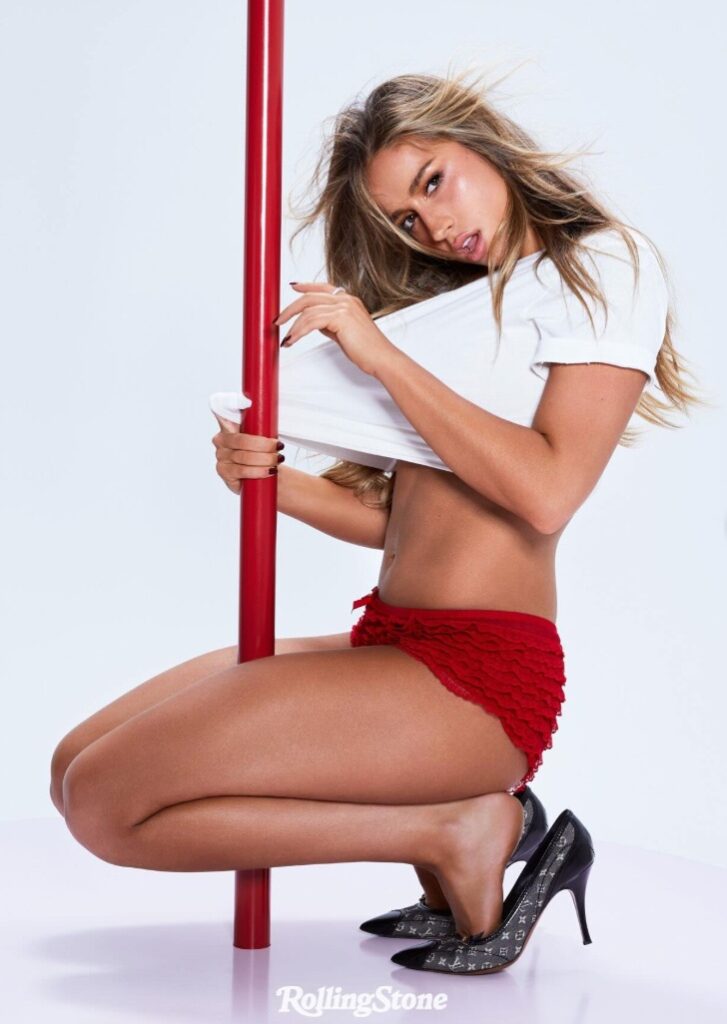
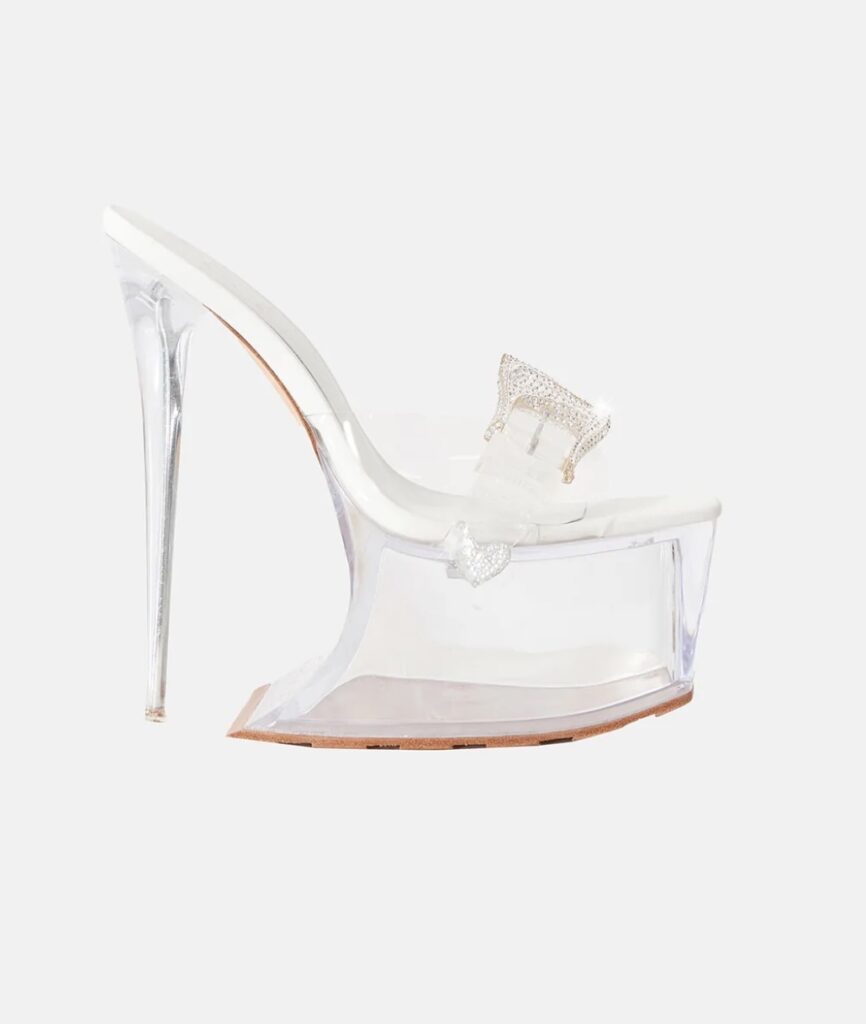
What does this “representation” mean for SWers, who, despite increased visibility, remain without basic workers’ and human rights? In the context of whorephobia,2 these attempts at representation remain appropriative in nature. In other words, contemporary civilian populations can use SWer aesthetics as social signifiers while bypassing the legal and social stigma, marginalization, and violence that comes with association to the sexual labor of sex work. Clear platform heels and lace bodysuits—accessories which historically guaranteed sneers and jarring looks in public—are now signifiers of “cool” girls, or more precisely, the “good” whores.
The concept of “good” whores versus “bad” whores stems from the same Madonna Whore Complex (MWC) 3 binary that plagues women. In the same way that the MWC creates feminine hierarchies based on differing levels of purity, the idea of “good” whores versus “bad” whores creates what is called the whorearchy, classifying some SWers as pure and others as impure. These hierarchies, whether those afflicting women or whores, operate from subjective standpoints and will differ between social groups and classes. For example, within some religions, a woman who has sex before marriage will likely be considered impure, while under the whorearchy, a prostitute who has unprotected sex for money will likely be considered impure in some sex-working circles.
The civilian woman has found a way to appropriate the socially acceptable aspects of sex work–sexiness, independence, and femininity, to name a few–through the signifiers of SWer dress and dance. By playing the whore, the civilian woman offers polite society the newfound position of “good” whore, that is, a woman who will never negotiate her sexuality for profit, but will exploit the whore’s aesthetics for her own social gain. In this way, the cosplaying whore offers a means of redemption for the “bad” whores (the SWers); an example of what they could be if they stopped whoring and began to use their sexual capital in ways that are socially acceptable, for instance, becoming a devoted wife, who only fucks her husband like a whore. The “good” whores are rewarded at institutional and social levels for their work in assimilating the “bad” whores into polite society, by being allowed to remain honest and open about their behaviours without fear of repercussions.
Systemic Oppression of SWers
Firstly, it’s essential to establish that SWers face various forms of oppression, regardless of their position under the umbrella term “sex work.” Strippers, who often occupy a more privileged position within the industry, nonetheless face institutionalized marginalization. Street-based workers, by contrast, bear the brunt of this oppression.
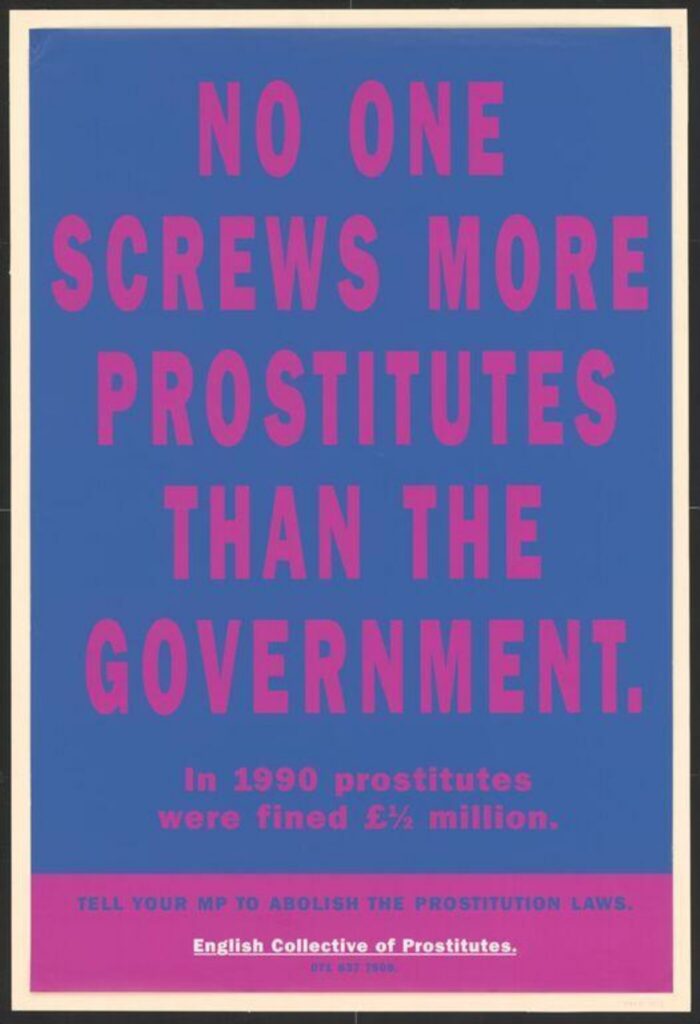
The passing of Bill C-36 in 2014 and its subsequent reforms, such as section 213 under “Stopping or Impeding Traffic” of the Canadian Criminal Code4, highlights that the Canadian government is intentionally targeting street workers by forcing them to move their work to more hidden areas, such as industrial zones, and therefore more dangerous areas. The movements of street-working women are surveilled and criminalized through many means, with this reform being but one example. Additionally, the adoption of the Nordic model—which criminalizes clients—makes safety measures such as client verification and screening increasingly difficult for full-service SWers, as Johns5 frequently wish to keep anonymity in the face of criminal activity.
Though they often aren’t vulnerable to all the same types of oppression, it is not uncommon for erotic dancers to also face forms of systematic marginalization. Authors Celeste Ivy and Melina May expose the ways that local governments use zoning, urban planning, and business licensing regulations as a guise for “sanitizing” the city of its sex-working communities in so-called Montréal (tiohtià:ke).6 For instance, the purchase of new strip club permits is forbidden in the city, ensuring the progressive decline of clubs over time. These regulations allow cities to effectively and discreetly eradicate, not only strip clubs, but red light districts as a whole, and consequently SWers themselves.
The ways in which the present-day Canadian government uses systemic oppression–explicitly and implicitly–to marginalize a plethora of different SWers is unequivocally clear. These attacks on sex-working communities are only reinforced through civilian populations, such as circus performers and pole dancers, who wish to dress up and play the part of the SWer, without ever facing the lived realities of SWers.7
Circus and Pole Dance in History
The sex-working roots of pole dance, and even circus, are non-negotiable. Although pole dancing has various roots in Celtic, Indian, and Chinese cultures, the dance form–in the context of erotic dance–originates from the creative use of the tents’ central pole structure in circus performances by belly dancers.8 The dance became known as “hoochie-coochie” and was often performed by belly dancers, namely, Little Egypt.
The name Little Egypt embodies a plethora of women who have used it as a stage name, but two women in particular are responsible for the legacy behind the name and dance: Ashea Waba and Fahreda Mahzar.9 Waba and Mahzar, though not the first of their kind, were similarly influential on the sex work industry as their striptease performances were foundational to the practice that would eventually evolve into professional stripping.
Waba, notably, was involved in a highly controversial incident known as “Seeley’s Dinner” in 1896, which became the central focus of the media and a consequent trial at the time, and was arrested on several occasions for performing “offensive” dances.10 Although Waba was a highly successful and wealthy woman by the time of her death, she faced oppression in the form of media sensationalism, ridicule, and penal persecution for her performances throughout her life. Waba and her taboo striptease were emblematic of the violence and marginalization that strippers would come to face in contemporary times.
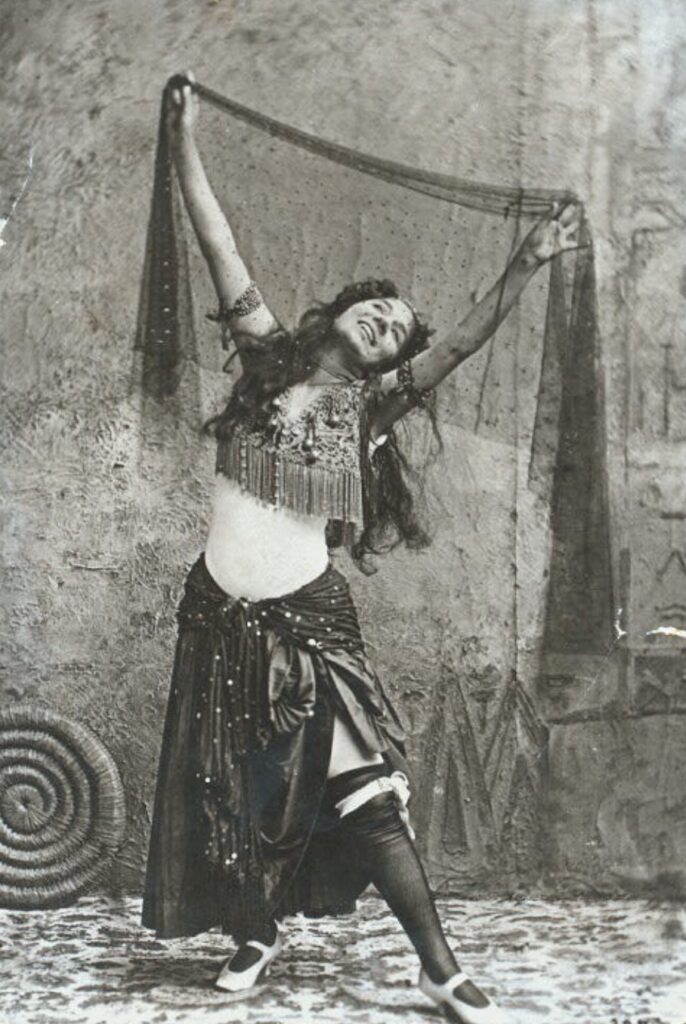
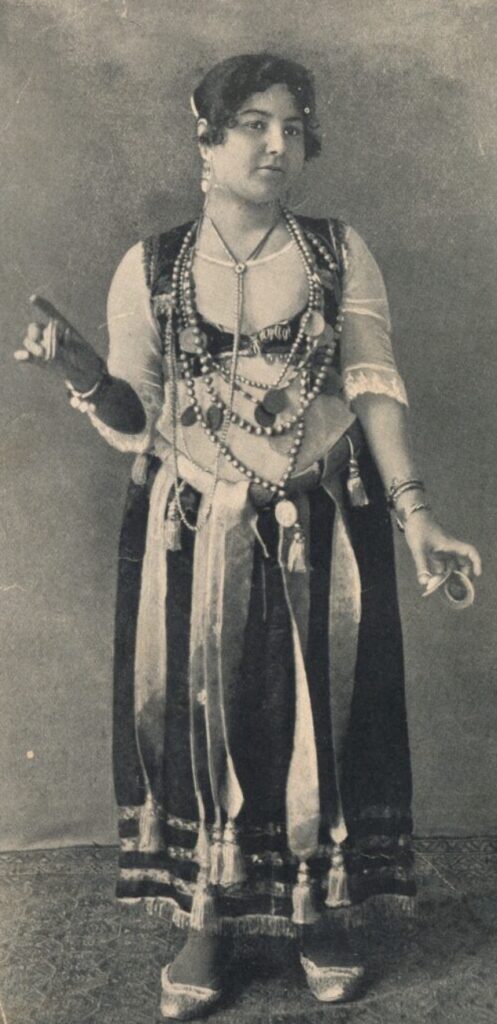
Additionally, during the vaudeville era of circus performances in particular, the worlds of sex work and circus were much less divided. A section of the circus grounds was commonly reserved for burlesque-stripping performances (where strip club culture partially originated from), while another area was reserved for women to find men for full-service sex work.11 At this time, there was much less of a separation and stigma between SWers and performers.
When considering the origins of pole dance in striptease and circus acts, it becomes clear that sex work has been intertwined intrinsically with pole dance at its roots and throughout history. Since modern fitness pole dance originated from strip club pole dance, it is therefore also inextricably linked to sex work and cannot and should not be meaningfully separated from it.
The Whore in Popular Media
In 2024, Sean Baker’s film Anora captivated a broad audience while portraying what some consider an honest stripper tale. The movie won the Academy Award for Best Picture, among many other awards, making it one of the first of its kind: that is, a prestigious award-winning film whose protagonist is both a full-service SWer and a stripper. When considering other stripper and SWer representations in recent popular media, we see that Anora does not stand alone.
Baker’s film comes hand-in-hand with a variety of other popular cultural references to sex work. To name a few, Garage’s recent pole dance advertising campaign, popular fashion brands selling garments traditionally associated with SWers/strippers, and celebrities adorning these outfits themselves. Naming all of these examples could fill a book by itself, but some household brand names that come to mind are Poster Girl, Shein, and the retailer SSENSE. As for celebrities, it’s common for A-listers such as Kylie Jenner, Doja Cat, and Lady Gaga to sport shapewear dresses and platform Pleasers or Hella Heels at red carpets, photoshoots, and concerts.
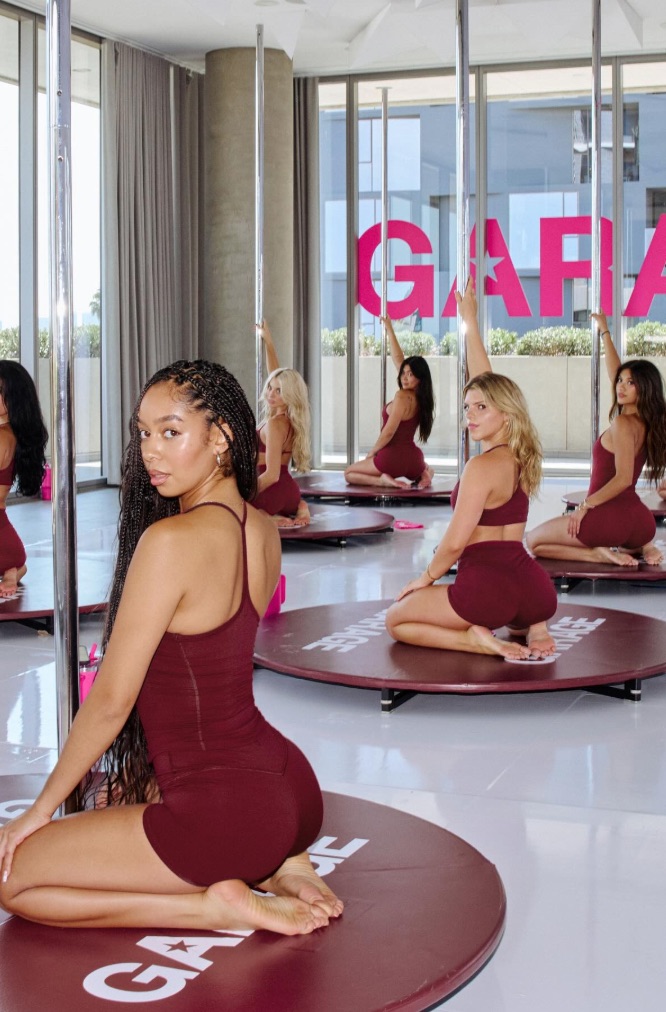
For most SWers, listing these examples here may feel redundant, as the image of celebrities in nightclubs and on red carpets in their Pleasers with fishnet bodysuits has been seared into our collective consciousness. Even better, the exorbitant prices of the teeny high-fashion branded one pieces–that look like what we would wear to work–have already been mocked and scoffed at in the locker rooms of hundreds of clubs. However, the “representation” of SWers and their garb in popular media is an important turning point to record, as despite this increasing representation, SWers continue to have little to no rights as workers or humans.
This appropriation in popular media has an effect on both civilians and SWers. As we are seeing an influx of “visibility” in popular media, we’re also seeing it in popular culture, most commonly in areas of dance and performance. Not only has the garb and story of the SWer been taken and reappropriated, but so has the dance. Two notable examples come to mind, circus performers and pole dancers, who seem to be increasingly interested in sensual performances. This appropriation stands dull, both physically and ideologically, beside the continued systemic oppression of SWers and their everyday realities.
Pole Dancers
In the last twenty years, pole dancing—a historically taboo and evocative dance—has entered the mainstream. This trend is confirmed by the numerous civilian women who have become online personalities and influencers through their pole dancing fitness accounts, alongside the continuously skyrocketing number of in-person pole dancing fitness classes. Kerry Allen notes this sudden influx in her piece Poles Apart, in which she records that “The Miss Pole Dance UK website states that between 2005 and 2007 the number of dance schools offering pole dancing fitness classes grew by 4200%.”12
Self-proclaimed independent erotic artist Anna-Liisa, for example, has over 160 000 followers on TikTok and has successfully created a lifestyle brand out of sensual pole dance. Anna-Liisa is more often than not seen in a micro bikini, tights, and Pleasers in her content.
Scouring Anna-Liisa’s Instagram, TikTok, Patreon, personal website, and other sites connected to the sensual dancing collective she founded reveals little to no mention of sex work. 13 The only semi-easily accessible mentions of sex work come from story posts on Anna-Liisa’s Instagram highlights section about discounted tickets for SWers and condemning whorephobia at her events. Regardless of these passive mentions of SWers, Anna-Liisa has failed to engage in any discussion regarding the sex-working roots of pole dance and the ever-present stigma against modern SWers and strippers.
Anna Liisa’s website states that “her mission is to claim space for authentic femme sensuality within the performance and theatre world by bridging the gap between technical pole dance and true female sexuality.”14 Her Instagram helps to define the core of her pole dancing as “exploring how to move in ways that feel good and that simultaneously transpire an aesthetic story for yourself or somebody watching.”15
Despite an alleged mission to integrate feminism in her work, Anna-Liisa remains overwhelmingly quiet on issues concerning the workers upon whom she built her pole dancing brand. In addition, the labelling of her pole dancing as “technical” implies that pole dancing as a stripper lacks the level of sophistication that her hobbyist pole dancing maintains. Defining striptease, pole dance, and heel dance as an “aesthetic story,” particularly in the face of refusing to advocate for, or acknowledge, SWer struggles, emphasizes Anna-Liisa’s ignorant appropriation of historically and currently marginalized working-class people and their dance.
Although Anna-Liisa is one example of the appropriative tendencies of pole dancers, she is emblematic of a much larger trend of whorephobia and a misunderstanding of feminism in the pole dance community. Allen discovered in her research that pole dancers in the UK typically “displayed confused and ambiguous understandings of the concept of feminism.”16 In addition, the pole dancers that Allen interviewed and studied typically distanced themselves from the sex-working roots of pole dance:
The women in this study positioned pole dancing as something respectable often by describing it in comparison to other activities which were seen as ‘worse’ than fitness pole dancing, or less respectful, suggesting, for example, ‘it’s not like I’m taking my clothes off (Amy). Much of both the advertising of these classes and also the ways in which the women I interviewed describe pole dancing is by stressing what pole dancing is not. It is described as something unlike the ‘ordinary’ aerobics class, yet also unlike what is described as the ‘sleazy’ pole dancing which occurs in lap dancing clubs. Fitness pole dancing is instead positioned by my respondents as something which is separate from both of these spheres and which retains a superiority or distinction from both the ‘ordinary’ and the ‘sleaze’.17
We see here that there is a contemporary trend of civilian women appropriating the signifiers of sex work for social gain, allowing them to appear sexy in social contexts without being legally or socially persecuted for being a whore.
These whorephobic ideals culminated in the 2010s with the popularity of the hashtag #NotAStripper among pole dancers, who deliberately distanced themselves from SW, due to the stigma attached to the work, while appropriating the very dance of SWers. Searching #NotAStripper reveals a post from X user Danielle Orellana that states, “No, I’m not a stripper. Anyone can take their clothes off. But pole dance takes discipline, determination, strength of body and mind, and HARD WORK.”
Whorephobia presents itself clearly in many aspects of the pole dance community, but is particularly evident in the refusal to acknowledge SW roots of pole dance or other “sensual” dances, ignorance of SW struggles, and pole dancers’ adamant distance from association with SWers. Pole dancers’ deliberate erasure and condemnation of SWers is incoherent with their common goals of feminism, as they exclude a population of largely working-class women from their “feminism.” The whorephobic ideals that civilian pole dancing women perpetuate are demonstrative of a desire to maintain status within feminine hierarchies.
Circus Performers
As modern fitness pole dancing has increased in popularity, the dance form has found its way back to the circus industry. From observational experience an increase of circus performers have become pole artists. On another note, there is less funding towards the arts and as circus companies are facing budget cuts, there is more pressure on succeeding as their odds decrease. Many companies lean into making shows sexy as producers and directors often think it is what would be desired by audiences, and easier to sell to the general public. Sex sells.
Despite increases in sexy performances within circus communities and companies, there is plenty of stigma directed towards SWers, and more specifically strippers. Many circus artists come from a pole dance background and once in circus, often play the role of stripper and SWer, while having no connection to SW and the SWing roots of pole. For example, Bernard Cabaret Gourmand—a bar with aerial circus performances—recently opened in tiohtià:ke (Montréal), where girls are often hired to put on Pleaser shoes and lingerie; another indisputable appropriation of SWer’s dress particularly in the context of no sexual labor.
Some directors and people in roles of power in the circus industry hold a reputation for coercing performers into sensual or sexual roles, characters and outfits while not receiving sufficient compensation in return. Circus artists are often coerced into showing more skin, moving more sexually than they feel comfortable, whereas, as strippers, the performance exchange is a similar dynamic yet, generally within each dancer’s boundaries as they are willingly consenting to do their work, knowing they will receive substantial pay in return. Refusing to pay circus artists fairly for sexual performances is not only an industry malpractice but may also be a product of the circus industry’s whorephobic tendencies.
Companies such as the Seven Fingers and Cirque du Soleil have hired women to play the part of the whore despite a clear disconnect from the many diverse realities of SWers. Often the performers are doing beautiful, technical, and energetic work, yet it’s a precarious line because they are representing SWers who aren’t in a place to represent themselves. While the performers are also often playing a role or character that misrepresents the SWer or is only represented in a show with a fetishized or unbalanced intent.
Parallel to this, there is a culture of shaming people in circus who perform in more sensual and sexual attire, and who do more splits, as this movement is often associated with sexual movements, and seen as easier than more power type movements. There is a fine line between performing while being cute, and looking too slutty from the civilian perspective, something we also see among the pole dancing community.
Many circus artists also shame SWers, more specifically strippers. Those within these communities of circus and pole fitness often make whorephobic comments towards those who chose and perform sexual services.
We see here that since the vaudeville era, the relationships between circus, pole fitness and SWers has evolved into separate industries. Circus and Pole communities reflect one another in their overall negative outlook on SWers, having once been connected and cohesive.
Are you a Good Whore or a Bad Whore?
Refusing to recognize the lived experience of SWers, lives of which are more often than not precarious and highly stigmatized—especially in the case of more marginalized workers such as people of colour or trans folks —reveals that the recent representations, by way of SWer clothing, dance, and stories, namely among pole dance and circus performers, are merely forms of appropriation.
In putting down and ignoring the oppressed SWer—while claiming her dance and dress— the civilian woman gains social merit and higher status within feminine social hierarchies. Pole dancers themselves, as mentioned above, actively balance between a feminine identity associated with “sleaze” and a feminine identity associated with “ordinary,” so that they are perceived just right in social contexts.18 Kerry writes:
[Pole dancing] women felt a pressure to position and balance themselves, manage impressions of themselves, and work hard at their identity in order to position themselves on the ‘respectable’ part of this continuum, somewhere in the middle, this being regarded as the most appropriately feminine identity and in line with cultural expectations of femininity. 19
In this way, civilian women occupy the position of “good” whores, that is, engaging in socially acceptable displays of sexiness and femininity, while the sex-working woman occupies the position of a “bad” whore, which carries stigma for “selling” one’s body and perceived social deviancy. The concept of “good” whores versus “bad” whores is highlighted–however intentionally or not–by Allen’s research as she and her interviewees position recreational pole dancing as different or not “ordinary” yet, without the “sleaze” attached to the pole dancing that strippers do.20 In this sense, civilian fitness pole dancers have reappropriated the dance and dress of the “bad” whores, and modified them into generally accepted social practices under the guise of feminism, community, and fitness.
The civilian woman is rewarded at an institutional and social level for reappropriating the SWer’s “bad” behaviours into newly adapted and “good” socially acceptable behaviours. This reward is evident in these women often being celebrated for their efforts of empowerment,21 and the ability to continue to use institutional benefits without fear of any form of systemic or social oppression. Allen’s research on the pole dancer and performer Kate demonstrates this privilege, as she can be honest with her son about what she does and perform at large public events:
Kate performs pole dancing at events including balls and dinner-dances, where she is hired to perform a pole routine on the stage. Kate has a young son, and she described in her interview how she had explained to him her occupation as a fitness pole dance instructor and as a performer at events by presenting it as something respectable, in comparison to working in a lap dancing club…Kate described that she performs pole dancing at ‘really quite respectable events’ and ‘occasionally I get the odd like ‘woooooo’ as I come on stage, because they think I’m gonna do something else, and then I do like a dancey performance and it goes down well’. By contrasting this to the pole dancing which takes place in lap dancing clubs, Kate aims to demonstrate her own respectability, but by doing this emphasises her perception of the disrespectability of both strippers and their male customers.22
It is evident that pole dancers or circus performers who engage in more sensual performances do not face the same risks that SWers do when claiming income, crossing borders, or seeking clientele, just to name a few. This is clearly demonstrated by Kate, who pole dances at “respectable” events and is therefore regarded as moral and good. It is undeniable that these performers casually play the whore from a position of extreme privilege, all while undermining the experiences of modern SWers. In this sense, recreational fitness pole dancers, along with sensual circus performers, have exacerbated the concept of “good” whores versus “bad” whores and contributed to a growing social sense of whorephobia and the whorearchy.
Conclusion
Increased visibility and representation—when it can be called so—of SWers and their aesthetics in popular culture is not synonymous with decreased whorephobia at legal or social levels, and, alternatively, often takes the form of appropriation. As we know all too well, contemporary SWers remain marginalized at an institutional level, from federal laws down to city zoning permits. Socially, the SWer remains an undesirable, despite their dress and dance becoming a contemporary signifier of the “cool” and “unique” civilian woman. This is a trend notably perpetuated by circus performers and modern fitness pole dancers, who rely on the SWers styles for their performances while typically distancing themselves from association with sex work and SWers.
When the civilian woman appropriates the SWer’s style and movements, she does so for social and institutional gain. Socially, she is rewarded for finding a balance between the regular and the taboo, while institutionally, the cosplaying whore faces no repercussions for her actions. The civilian woman is rewarded for her efforts in assimilating the SWer into polite society, that is, transforming the SWer into a free whore. She takes the acceptable aspects of SW that give her social merit, such as independence, sexiness, and charm, while removing any connection to sexual labour or its profits. She has discovered a way to tame the whore and is honoured for it.
Though the civilian performer who takes inspiration from SWers will remain forever opaque in the eyes of some SWers, there remain ways in which these performers can imitate more mindfully. Namely, these performers can advocate for the rights and recognition of SWers as workers and humans, while making it clear to their students and audiences that if they have a problem with sex work, they are not welcome in these spaces. Teachers and studios in particular could make concerted efforts to offer discounted or—even better—free classes to their sex-working students. However, we all know the often performative nature that “activism” takes when disconnected civilians attempt to partake. To illustrate this, we present McDonald’s Canada’s land acknowledgement section of their website.23
Alternatively, or in conjunction, SWers should advocate for systems that do not allow these hierarchies—such as the whorearchy—to persist. In the meantime, SWers and their allies must show up and out in the struggle for SWer rights as humans and workers. SWers should continue to disrupt the dominant and arbitrary understandings of “good” women and “good” whores, the same understandings that stigmatize and oppress our racialized, queer, and other marginalized comrades. We must remain increasingly wary of attempts at representation in popular media and culture, lest they further this concept of the “good” whore and perpetuate whorephobia against our more marginalized comrades. Simply put, we must reject being forcibly squeezed into a patriarchal-capitalist mold and refuse to be neatly assimilated into the very system that oppresses us. We want to keep whoring on our own terms!
1. Non-sex-working population. 
2. The hatred, disgust, or fear of SWers among civilian populations, or internalized in sex-working populations.
3. The Madonna Whore Complex is a psychoanalytical phenomena in which men see women as either angelic Madonnas or degenerate Whores.
4. “Everyone is guilty of an offence punishable on summary conviction who, in a public place or in any place open to public view, for the purpose of offering, providing or obtaining sexual services for consideration.”
5. The client purchasing the services of a SWer, may also be called a trick.
6. Celeste Ivy and Melina May. (2024). The Power Wielded by Cities: Striving for Local Resistance, retrieved from https://tinyurl.com/cities-cats
7. Not to say that every SWers experience is inherently bad or violent, but rather that increased social stigma and legal persecution, among other forms of marginalization, creates a difficult work and living environment.
8. Nikki Cagle. (2013). Evolution of the “Hoochie Coochie” Show from 1893 to the Modern Sex Industry (unpublished master’s thesis, Morehead State University).
9. Katherine Vecchio. (2019). Little Egypt: A Critical Biography (unpublished master’s thesis, City University of New York).
10. Ibid.
11. A. W. Stencell. (1999). Girl Show: Into the Canvas World of Bump and Grind, Toronto: ECW Press. and Rachel Shteir. (2004). Striptease: The Untold History of the Girlie Show, New York: Oxford University Press.
12. Kerry Louise Allen. (2011). Poles Apart? Women Negotiating Femininity and Feminism in the Fitness Pole Dancing Class, p. 10, retrieved from https://tinyurl.com/poles-apart
13. When this article was written the information on the mentioned pole dancer was gathered from their social media accounts and websites, some of which have since been deleted and are no longer as easily accessible.
14. Anna-Liisa. (n.d.). About – anna-liisa. Anna-Liisa. Retrieved November 28th, 2024, from https://annaliisa.net/about
15. Anna-Liisa. [@annaliisa____]. (n.d.). Posts [Instagram profile]. Instagram. Retrieved November 28th, 2024, from https://www.instagram.com/annaliisa____/?hl=en
16. Kerry Louise Allen. (2011). Poles Apart? Women Negotiating Femininity and Feminism in the Fitness Pole Dancing Class, p. 19, retrieved from https://tinyurl.com/poles-apart
17. Ibid.
18. Ibid.
19. Ibid.
20. Ibid.
21. See Cami Arboles, a Harvard graduate who became an internet personality from posting a video of her in a grad cap and gown while pole dancing. Arobles represents one among many pole dancers who have made acclaimed internet brands from pole dancing.
22. Kerry Louise Allen. (2011). Poles Apart? Women Negotiating Femininity and Feminism in the Fitness Pole Dancing Class, p. 169-170, retrieved from https://tinyurl.com/poles-apart ↩
23. Not to say that all land acknowledgements are made in bad faith, or not important, but rather to highlight the irony in McDonald’s participation in them and the sometimes performative nature of them (thank you folks at the Drug User Liberation Front).↩